International Workshop
Interactive Systems & Information Society Technologies (InterSys–2025)
May 5–7, 2025, Dubai, UAE
June 23–25, 2025, St. Petersburg, Russia
Working language: English
Seminar format: in-person. If it is impossible for foreign participants to arrive, their participation in the online format is considered by the organizers on an individual basis
Seminar locations: St. Petersburg, Russia (Congress Center of ITMO University at Lomonosova Street, 9); Dubai, UAE (Birla Institute of Technology and Science Pilani, Dubai Campus)
The objective of the InterSys-2025 workshop is to engage in comprehensive discussions addressing challenges and opportunities within the realm of developing interactive technologies in the digital environment. The focus is on exploring and dissecting the complexities associated with of advancing interactive systems across various sectors, including science, education, healthcare, business, public administration, and civil society.
Tracks and Key Topics of InterSys-2025:
- Human-Computer Interaction (HCI)
- Innovative User Interfaces (UI) and User Experience (UX) Design
- Multimodal Interaction (Speech, Touch, Gesture, Eye Tracking)
- Tangible and Embodied Interaction
- Accessibility and Inclusive Design
- Usability Engineering and Evaluation
- Artificial Intelligence in Interactive Systems
- Conversational Agents and Virtual Assistants
- AI-driven Personalization in Interactive Systems
- Explainable AI for User Interaction
- Adaptive and Context-aware Systems
- Emotion-Aware and Affective Computing Interfaces
- Virtual, Augmented, and Mixed Reality (VR/AR/MR)
- Immersive Experiences and Interaction Design
- Collaborative VR/AR Systems
- Haptics and Tactile Feedback in Virtual Environments
- Applications of AR/VR in Education, Healthcare, and Entertainment
- Interactive Machine Learning
- Human-in-the-Loop Machine Learning
- Visualization and Interaction with ML Models
- Active Learning for User-Centered Systems
- Explainable and Transparent ML Interfaces
- Gaming and Serious Games
- Game Design and Development for Interaction
- Gamification in Interactive Systems
- Social and Emotional Engagement in Games
- Virtual Environments for Training and Simulation
- Ubiquitous and Context-Aware Interaction
- Wearable and Pervasive Computing
- Intelligent Home and Smart Space Interactions
- Location-based Services and Interaction
- IoT-Driven Interactive Systems
- Collaborative and Social Interactive Systems
- Social Computing and Crowdsourcing
- Collaborative Systems for Remote Work and Education
- Computer-Supported Cooperative Work (CSCW)
- Interactive Systems for Online Communities and Social Networks
- Interaction Design for Emerging Technologies
- Brain-Computer Interfaces (BCI)
- Interaction in Autonomous Systems (Self-driving Cars, Robots)
- Quantum Interfaces for Next-Generation Systems
- Interfaces for Blockchain and Decentralized Systems
- Ethics and Privacy in Interactive Systems
- Designing Privacy-preserving Interactive Systems
- Ethical Challenges in AI-Driven Interfaces
- Trust and Transparency in User Interfaces
- Interactive Systems for Mental Health and Well-being
- Data-Driven and Adaptive Interactive Systems
- Interaction with Big Data and Analytics Tools
- Recommender Systems and Personalization Techniques
- Data Visualization for Enhanced User Interaction
- Adaptive Feedback Mechanisms in Interactive Systems
- Sustainable and Green Interaction Design
- Sustainable UI/UX Practices
- Energy-efficient Interaction Systems
- Designing for Behavior Change in Sustainability
- Interactive Systems for Smart Cities and Urban Planning
- Education and Training with Interactive Systems
- Interactive Systems for Online Learning and MOOCs
- Intelligent Tutoring Systems
- AR/VR in Education and Skill Development
- Interfaces for Special Education Needs
The workshop welcomes contributions and discussions on these tracks to advance the understanding and application of interactive systems and information society technologies in various domains.
IMPORTANT DATES – Dubai, UAE:
- 30 Mar 2025 – Papers Submission Deadline
- 15 Apr – Notifications of Acceptance
- 25 Apr – Camera Ready Papers
- 25 Apr – Early Bird Registration
- 1 May – Regular Registration
- 5–7 May 2025 – Presentation at the InterSys-2025
IMPORTANT DATES – St. Petersburg, Russia:
- 30 Mar 2025 – Papers Submission Deadline
- 12 May – Notifications of Acceptance
- 24 May – Camera Ready Papers
- 26 May – Early Bird Registration
- 1 June – Regular Registration
- 13 June – Authors Registration Deadline
- 23–25 June 2025 – Presentation at the InterSys-2025
WORKSHOP CO-CHAIRS
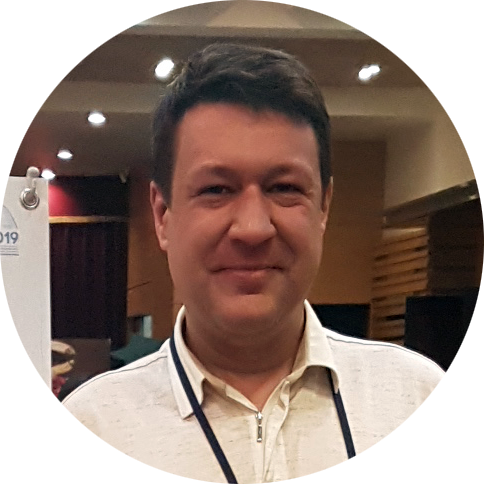 |
Maxim BAKAEV, PhD, Professor (Associate), Novosibirsk State Technical University, Russia |
 |
Elakkiya R, PhD, Professor (Assistant), Birla Institute of Technology & Science (BITS Pilani), Dubai Campus |
 |
Roberto PEREIRA, PhD, Professor, Federal University of Paraná (UFPR), Curitiba, Brazil |
 |
Lyudmila VIDIASOVA, PhD, eGovernance Center, Institute of Design and Urban Studies, ITMO University, St. Petersburg, Russia |
PC MEMBERS
- Sergey ALEKSEITSEV, Novosibirsk State Technical University, Russia
- Thiago CAMPOS, UTFPR Londrina / UEM / Agência Digital ICOMP, Brazil
- Caio CARVALHO, Universidade Federal do Paraná, Brazil
- Wei DAI, Huazhong University of Science & Technology, China
- Valeriia DEMAREVA, Lobachevsky State University of Nizhni Novgorod, Russia
- Ashish GUPTA, Indian Institute of Technology, India
- Angel JOTHI, BITS Pilani Dubai Campus, UAE
- Deógenes JUNIOR, Universidade Federal do Paraná, Brazil
- Dr. Sujatha M, SASTRA University, India
- Bharathi MOHAN, Amirta University, UAE
- Radka NACHEVA, University of Economics – Varna, Bulgaria
- Kumaran P, Veltech, India
- Shanthi P, SASTRA University, India
- Anton PASHKOV, South Ural State University, Russia
- Ashok RAJAN, Madras Institute of Technology, India
- Prasannakumar RANGARAJAN, Amirta University, India
- Olga RAZUMNIKOVA, Novosibirsk State Technical University, Russia
- Gustavo ROSSI, LIFIA-F. Informatica. UNLP, Argentina
- Gustavo Yuji SATO, Universidade Estadual de Maringá, Brazil
- Subramaniyaswamy VAIRAVASUNDARAM, SASTRA University, India
- Valeriia VIAKHIREVA, Lobachevsky State University of Nizhni Novgorod, Russia
- Zizhao ZHAO, Huazhong University of Science and Technology, China
SUBMISSION
- The contributions must be submitted in form of Full research paper (12–15 pages) and present original unpublished work from the authors
- Manuscripts submitted to the InterSys-2025 Workshop must be prepared using the Springer template
- All submissions must be done via the Microsoft CMT system
The submitted manuscripts must be anonymized, i.e. not to mention the authors, affiliation or references to projects carried out by the authors. This information would be added to the final version of the article, after its acceptance.
All submitted manuscripts will undergo double-blind peer review by the Program Committee members and external reviewers. The authors of accepted submissions will need to improve their paper based on reviewers’ comments and will be asked to provide a camera-ready version of their manuscripts.
PROCEEDINGS
The accepted and presented papers will be included in the IMS-2025 Proceedings and indexed in Scopus.
The authors of the best papers will be invited to publish significantly extended versions of their work in the Journal of Interactive Systems (an open access journal maintained by the Brazilian Computer Society – Scopus and DBLP indexing) or the International Journal of Open Information Technologies (approved by the Russian Higher Attestation Commission) – in the Russian language.
REGISTRATION
The registration fees are defined and collected by the respective representatives of the hosting universities.
Registration fees (Birla Institute of Technology and Science Pilani, Dubai, UAE)*:
|
Participant Profile |
Early Bird Fee |
Regular Fee |
|
Students UG/PG |
400 AED |
600 AED |
|
Research Scholars |
600 AED |
800 AED |
|
Academicians |
700 AED |
900 AED |
|
Industry Professionals |
800 AED |
1 000 AED |
* Co-Author (Every accompanying author) should pay additional 50% of the registration fee for offline presentations
Listener should pay 50% of the registration fee for attending conference
Registration fees (ITMO University, St. Petersburg, Russia):
|
Participant Profile |
Early Bird Fee |
Regular Fee |
|
Student Authors |
0 RUB |
0 RUB |
|
Authors from academia |
4 000 RUB |
5 000 RUB |
|
Authors from Industry |
6 000 RUB |
10 000 RUB |
More information is available at:
InterSys-2025 (Dubai): https://intersys2025.org/
IMS-2025: https://ims.itmo.ru/eng/
e-mail: ims@itmo.ru